The Pillow Narrative with Cunnington and Sanderson 2024
Cunnington & Sanderson invites creatives from around the world portray an emotive story on Instagram with the pillow t-shirt to raise mental health awareness and encourage people to talk about emotions. #pillownarrative
I was asked to contribute to the project in January 2024
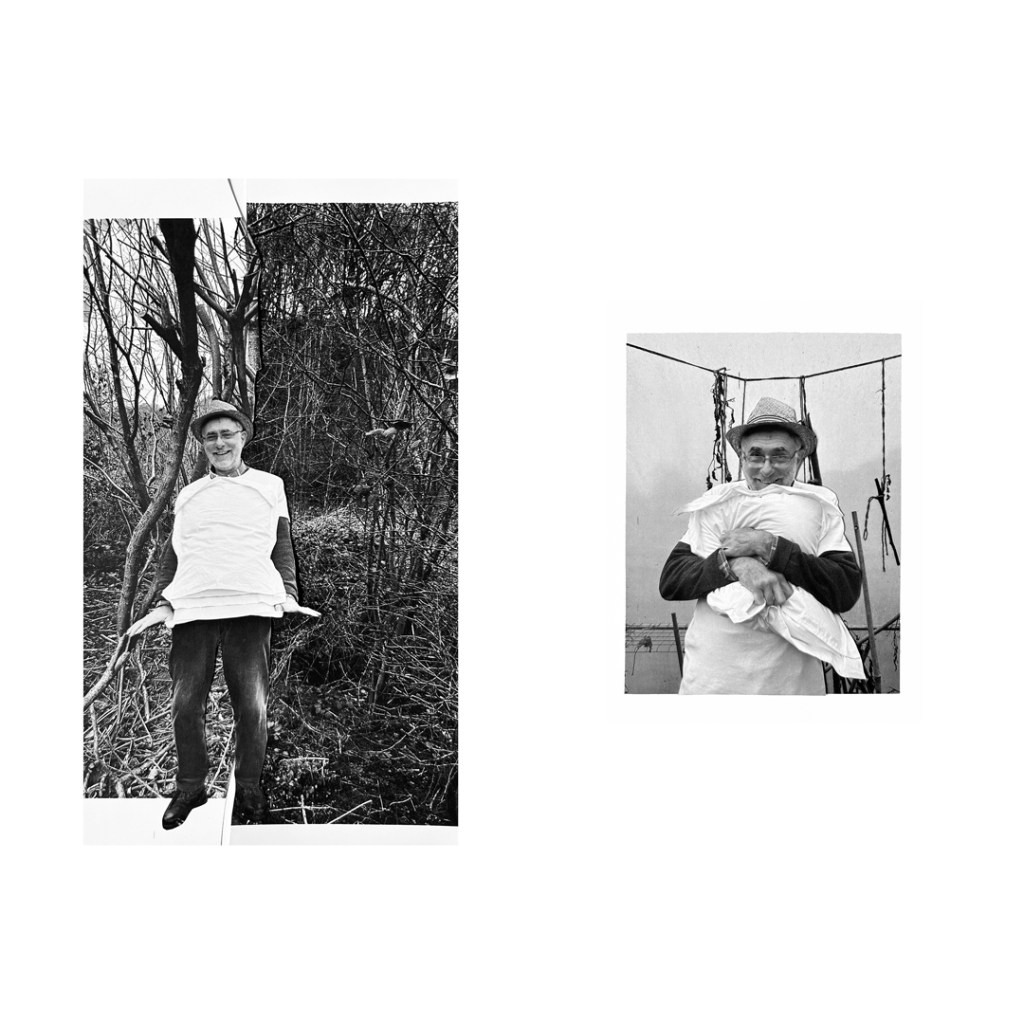
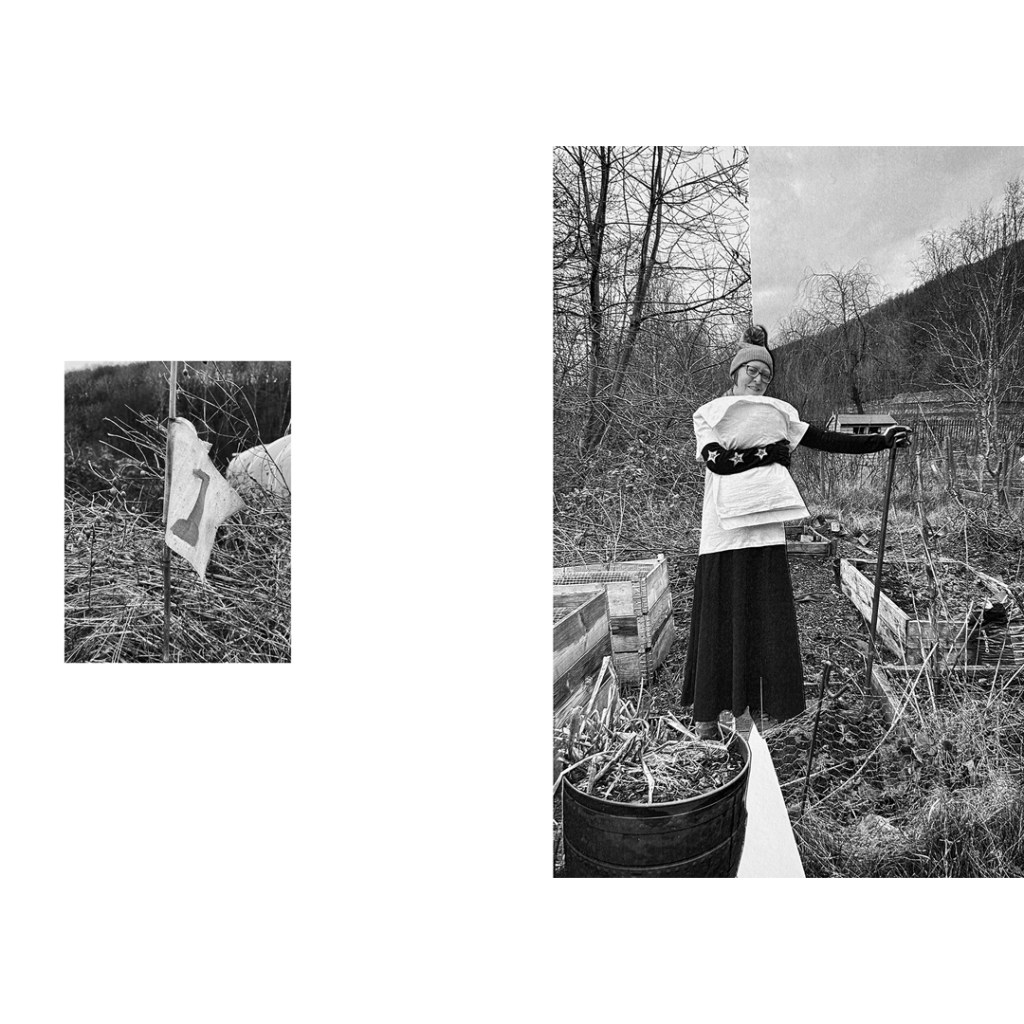
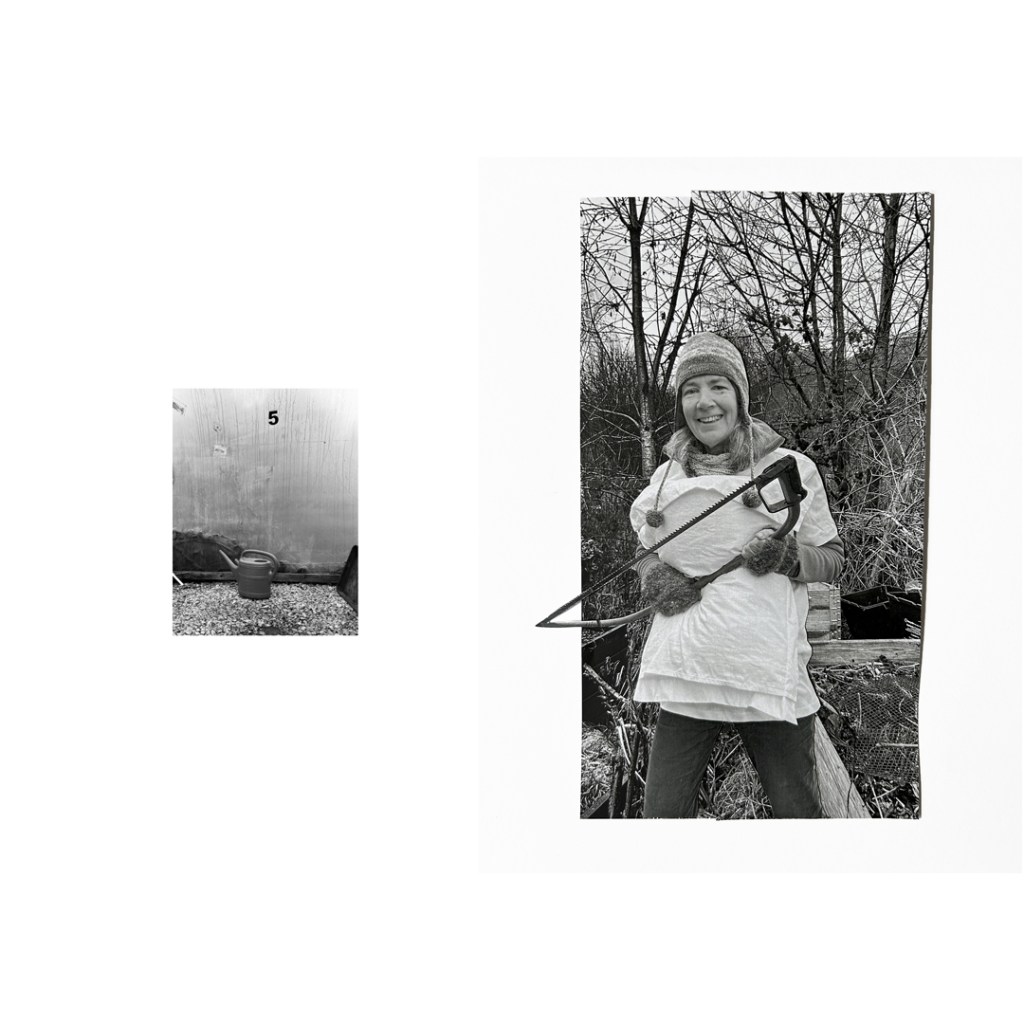
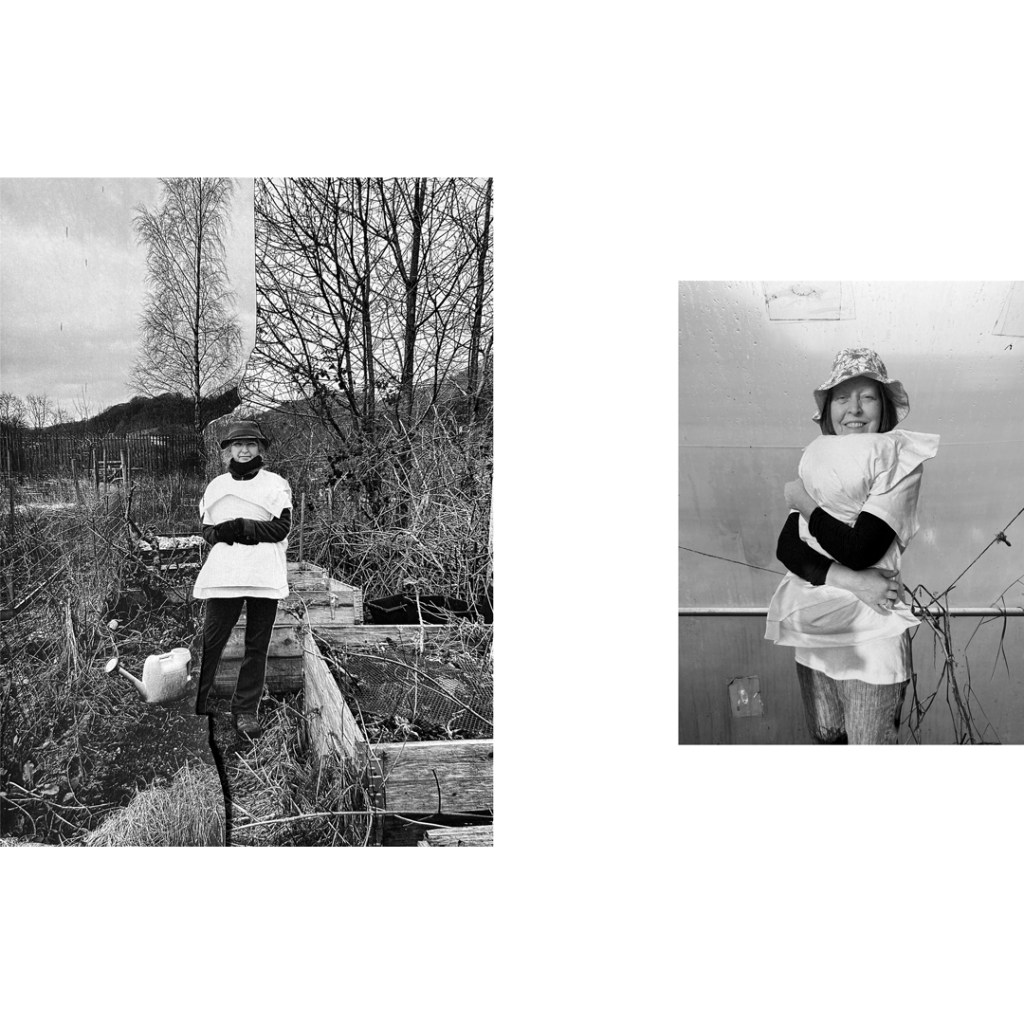
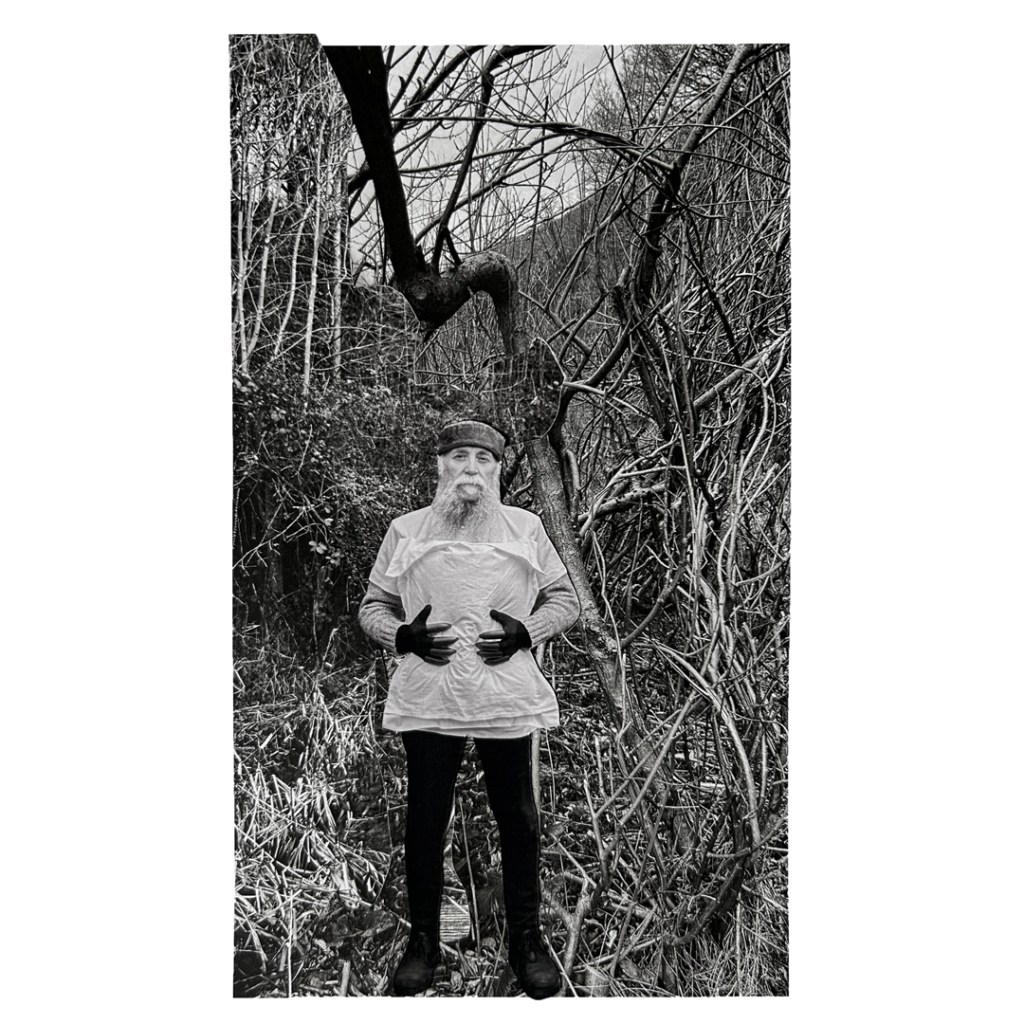
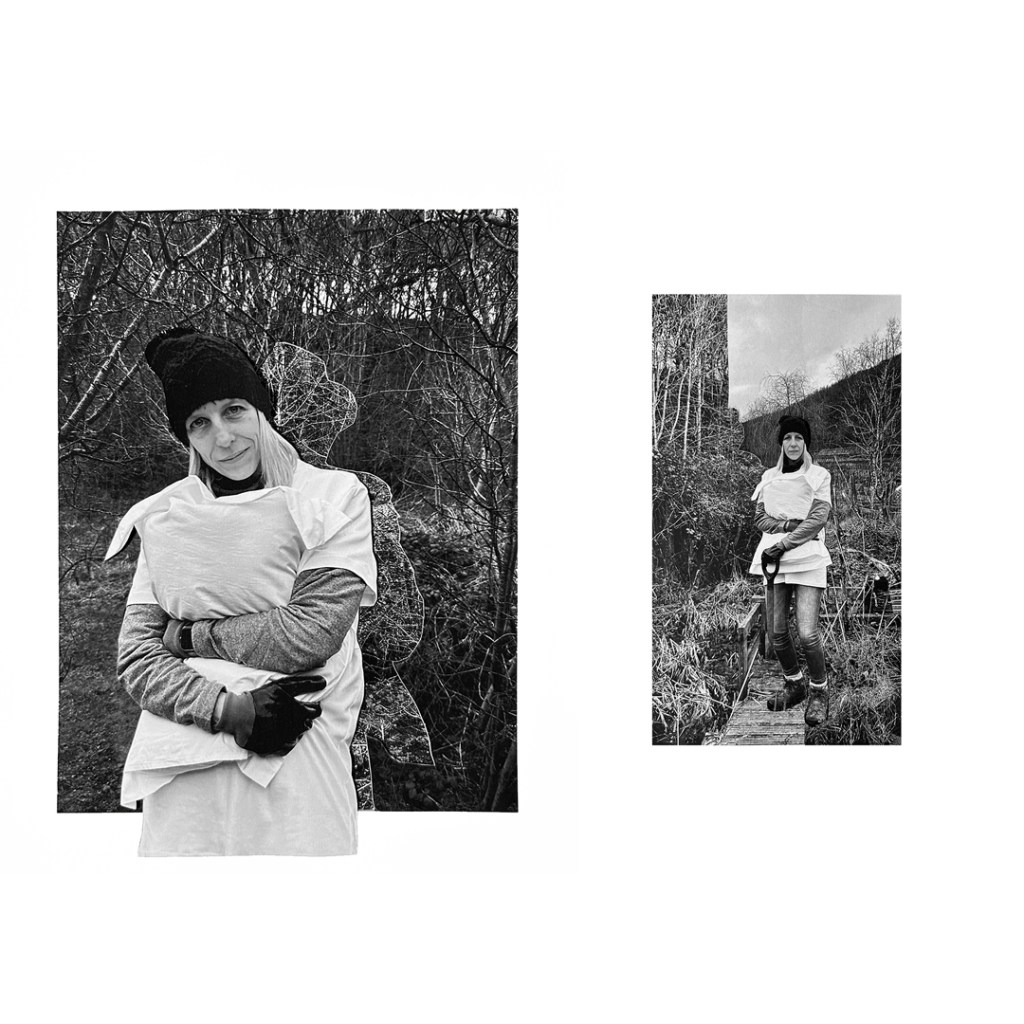
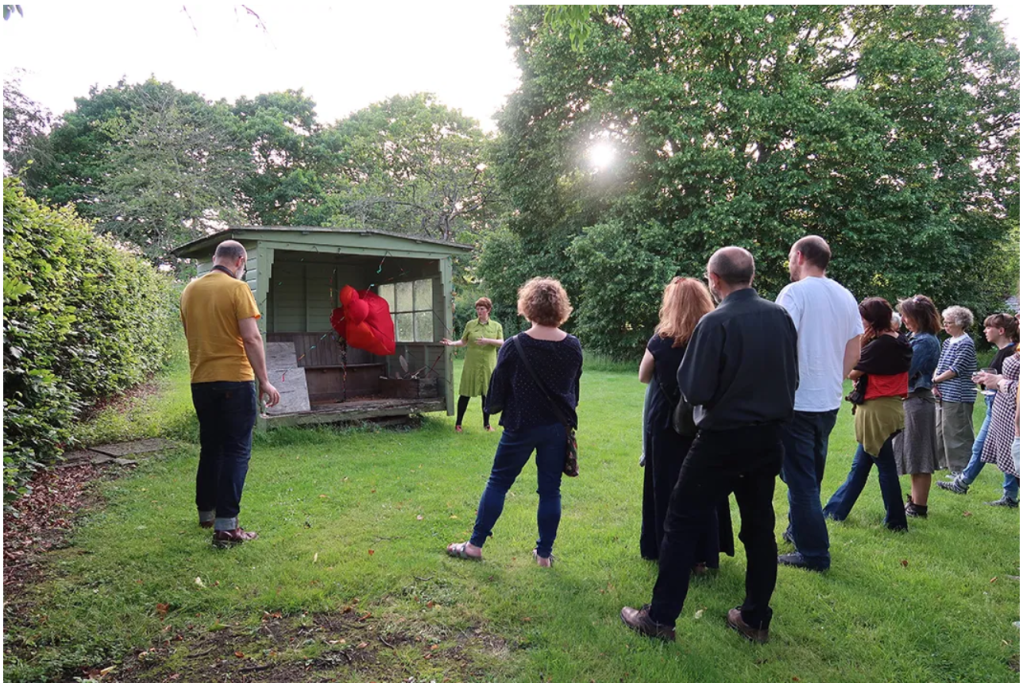
Tending plants and being part of an outdoor community can provide therapeutic tools that can improve our mental health, and photographing the community at Radacre Growing Project @redacre_gp seemed in keeping with the #pillownarrative aims.
I asked each participant how they felt wearing the #pillowtshirt and they repeatedly commented that they felt a bit silly at times, but protected and warm.
The project was shot in January and February when not much was happening on the growing front, so playing dress up and posing added some life to the site. I continued the playful theme by making collages from the portraits.
.
I’d like to thank @annieharrisonart Rob @breaking.things Bob Gaunt, Erika Keschner, Hedvig and Carole for modelling.
Sidney Nolan Trust Artist Camps
2019
‘Developing relationships and supporting practice’ was the third Artist Camps residency at the Sidney Nolan Trust. Participating artists: Isabel Benito-Gutierrez, Andrew Bracey, Ann Carragher, Jenny Eden, Sarah Eyre, Lesley Halliwell, Jackie Haynes & Rob Mullender.
More info about the artist’s responses to the site http://practiceandresearchinactionresidency.harts.online/blog/
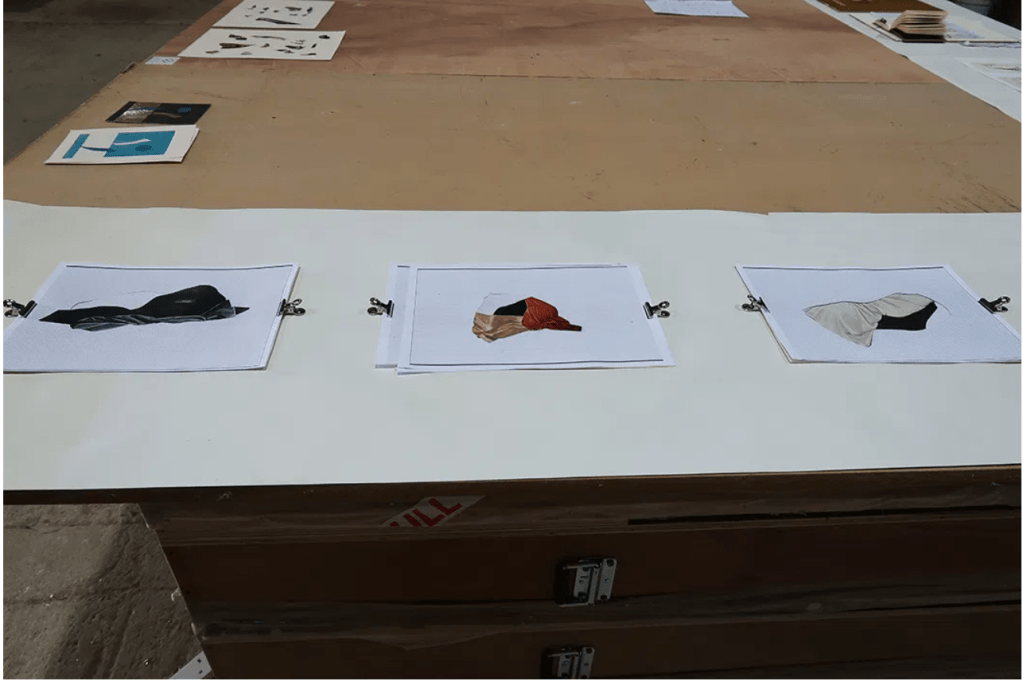
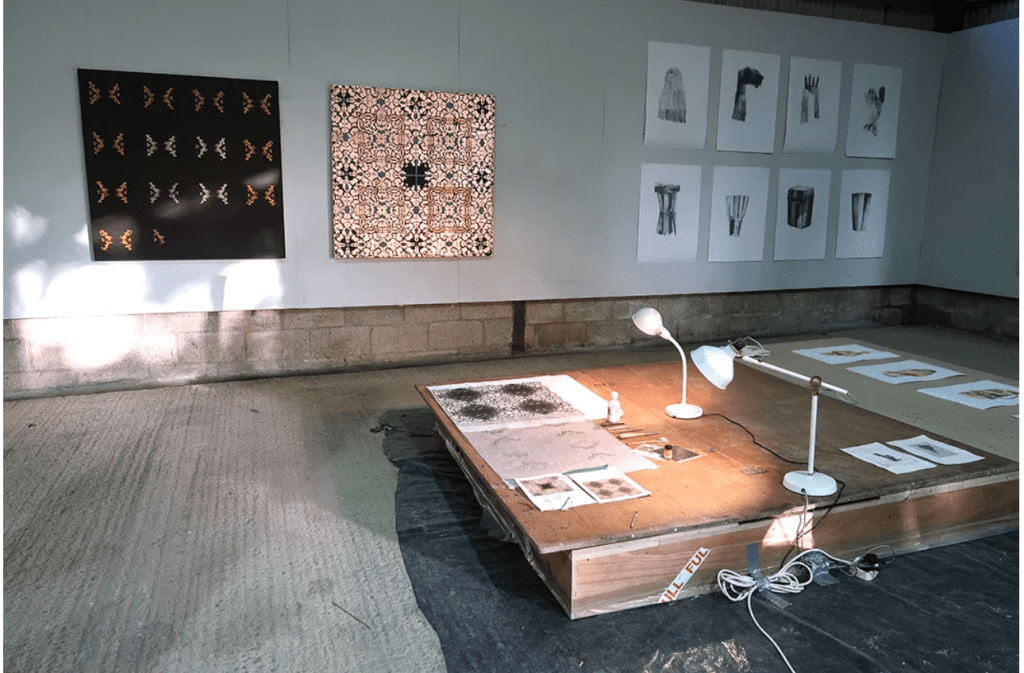
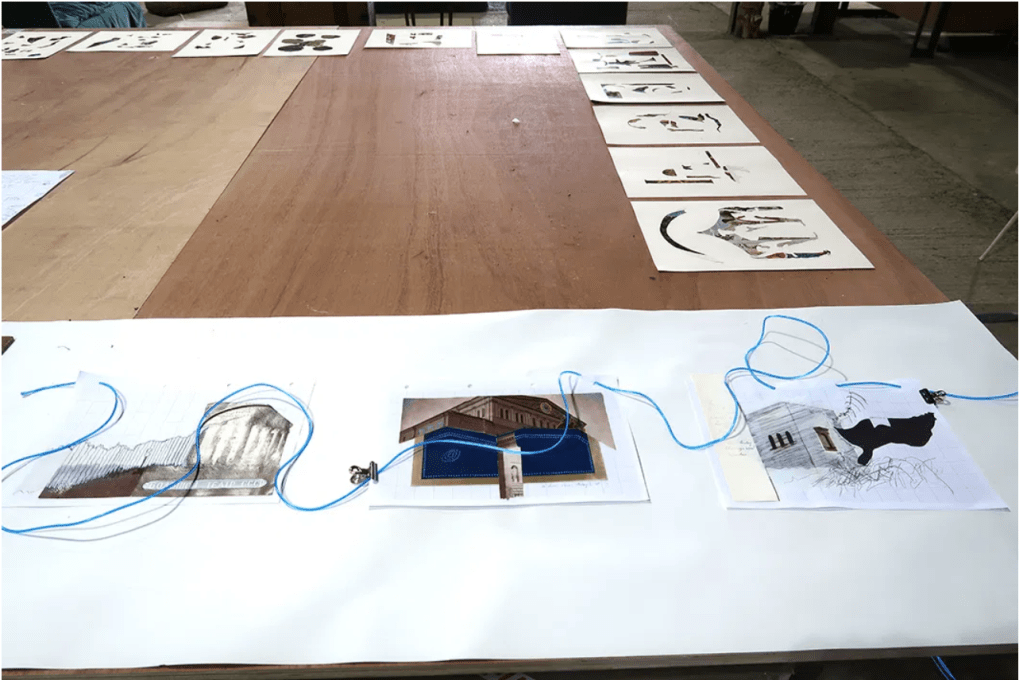
Residency Blog post: http://practiceandresearchinactionresidency.harts.online/2019/06/28/formless-forms-by-sarah-eyre/
2017 SNT Residency
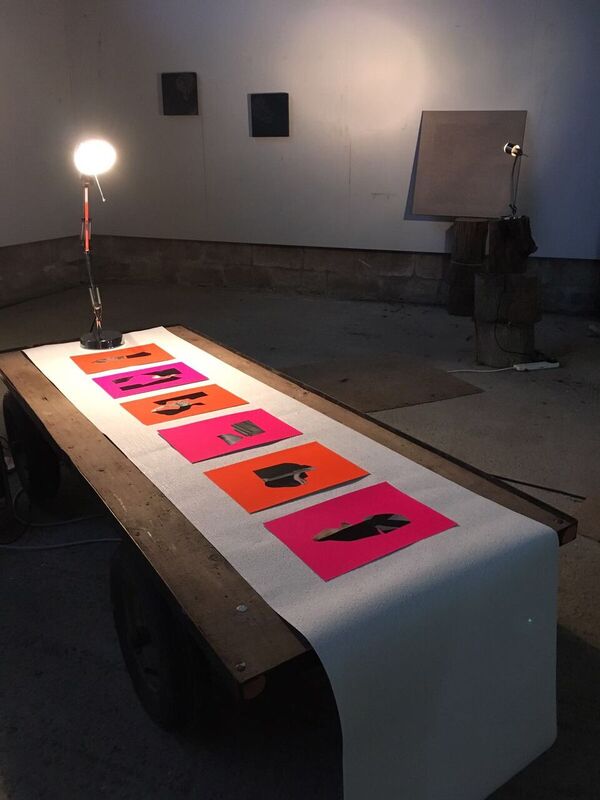
In 2017 eight PhD researchers joined the SNT Artists’ Camps 2017 residency at The Rodd. Coming together from different Universities across the North West they formed a cross-disciplinary group ‘Practice and Research in Action’ expressly for the residency. They explored different practice-based research methodologies and share a range of skills from felt-making to video work as they respond to the site in unexpected ways. Participating artists: Sarah Eyre, Manchester School of Art, Sara Davies, Manchester School of Art, Nigel Allmark, Manchester Metropolitan University, Pavel Prokopic, University of Salford, Jamie Jenkinson, Lancaster University, Gemma Meek, Manchester School of Art, Lesley Halliwell, Manchester School of Art, & Lin Charlston, Manchester School of Art.
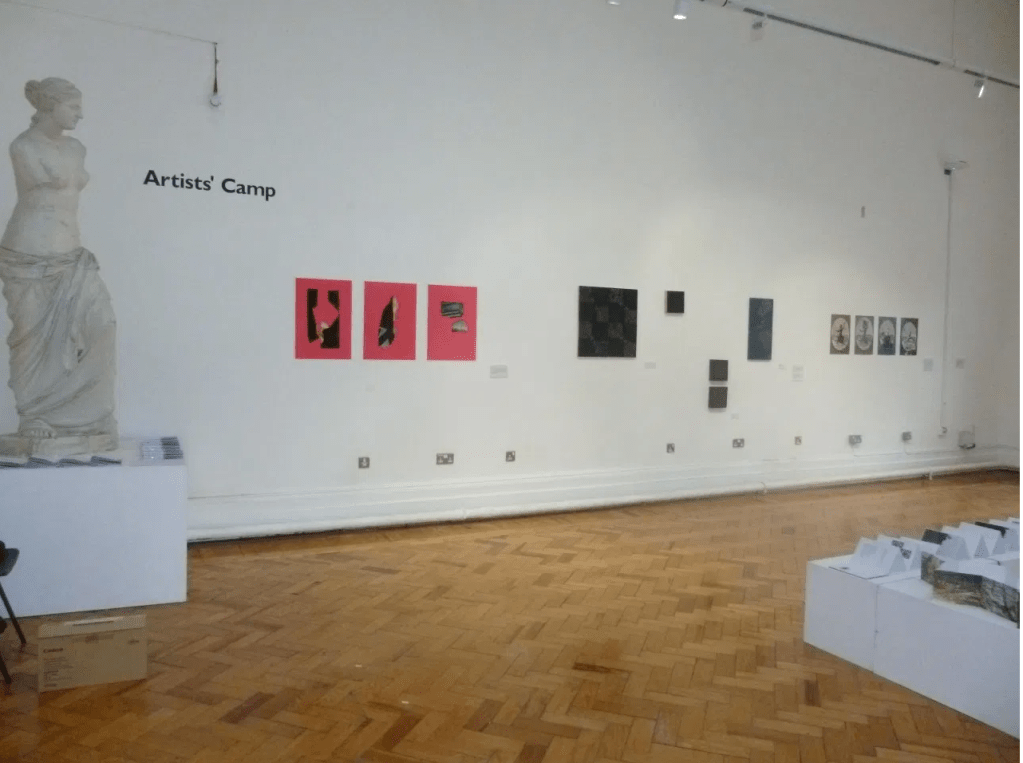
2015: Ante Meridiem
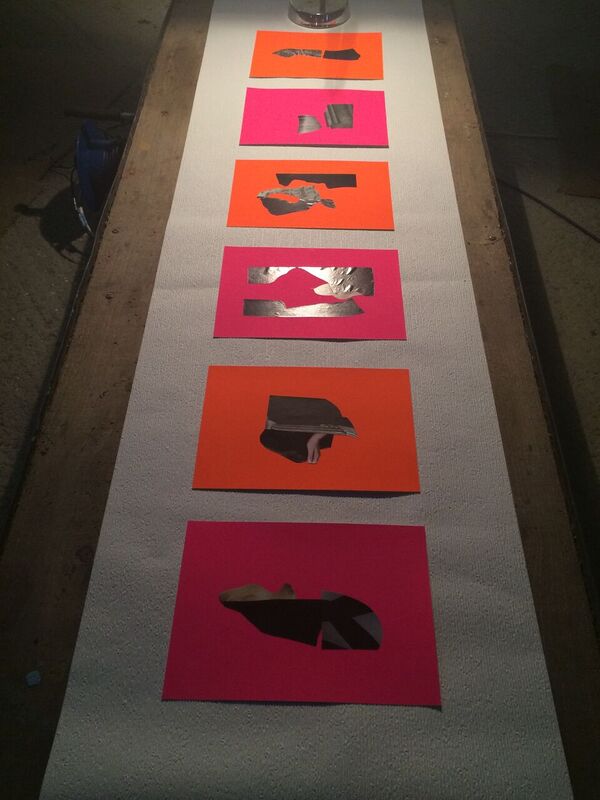
I was asked to contribute something on the theme of morning for Tide Press’s first publication ‘Ante Meridiem’. The project was devised by Richard Higginbottom, and other contributors include Mrianne Bjørnmyr, Alex Catt, Christopher Coyle, Sophie Davidson, Adrian Davies, Sean Gardiner, Sam A Harris, Richard Higginbottom, Richard Mulhearn, Layla Sailor and Oliver Udy
More info & reviews HERE, HERE and HERE
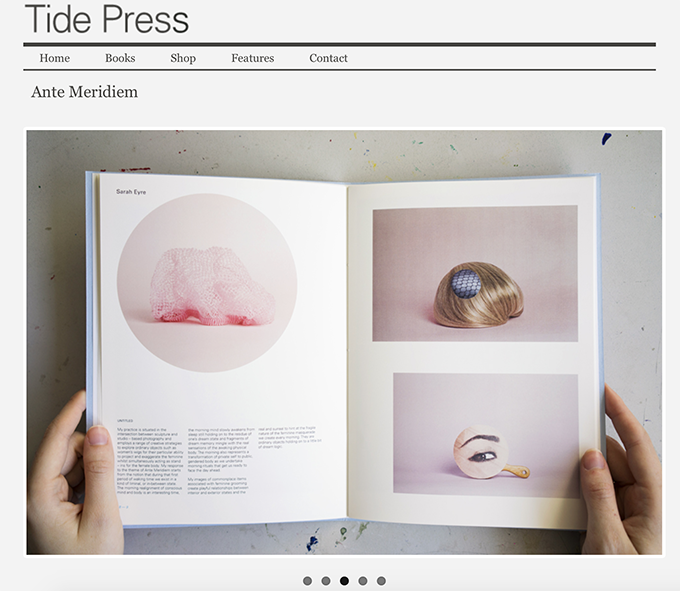
2013: ‘Spreads at Les Rencontres de la Photographie, Arles (fringe exhibition)
A group exhibition organised by Ed Watts and featured, in addition to my poster-zine, artist books made by Ed Watts, Mark Page, Marc Provins, David Oates, James O Jenkins, John Darwell, Heike Lowenstein, David Dunnaco and Graeme Vaughan. There is a nice review by Rebecca Dearden for Redeye HERE
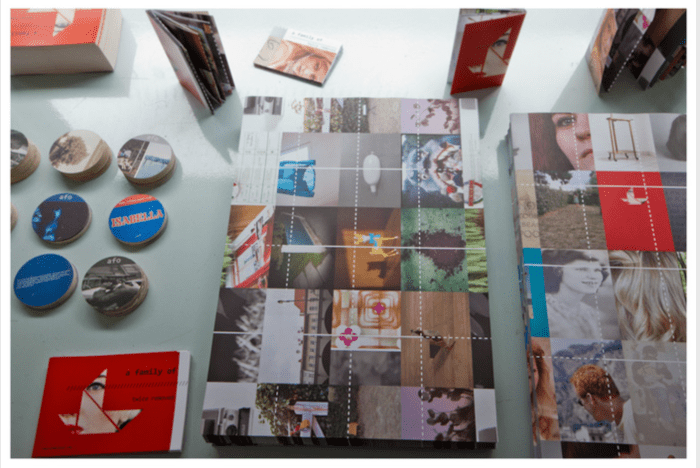
2010 – 2016: A Family of…
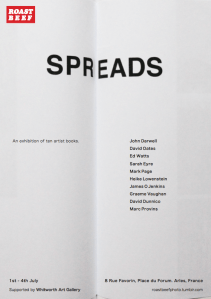
I’ve been a member of the photographer’s collective ‘A Family of’ for a few years now, our members have changed over the years, but currently the group contains AJ Wilkinson, Graeme Vaughn, Mike Stephens, Marc Provins, Sarah McAdam and Sian Gouldstone.
We are not particularly active at the moment (other than Instagram), but here are some of our best bits…
2015: A Family of postcard bombing at Liverpool’s Look 15 Festival – short film accessible via QR code
2013: Guerilla style poster ‘intervention’ at Liverpool’s Look 13 Festival
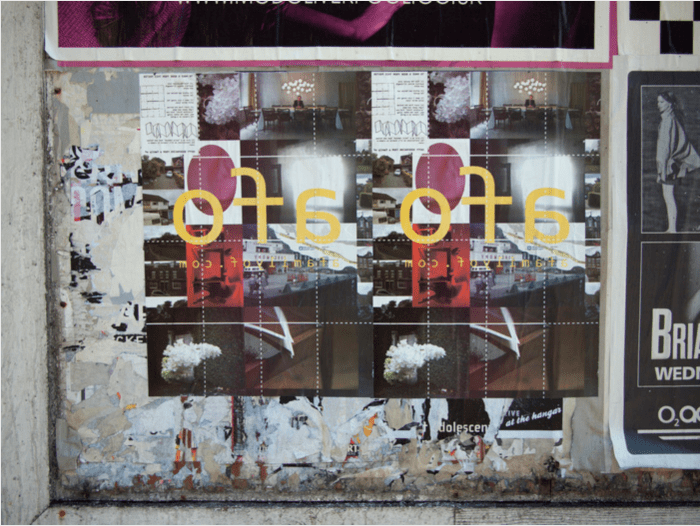
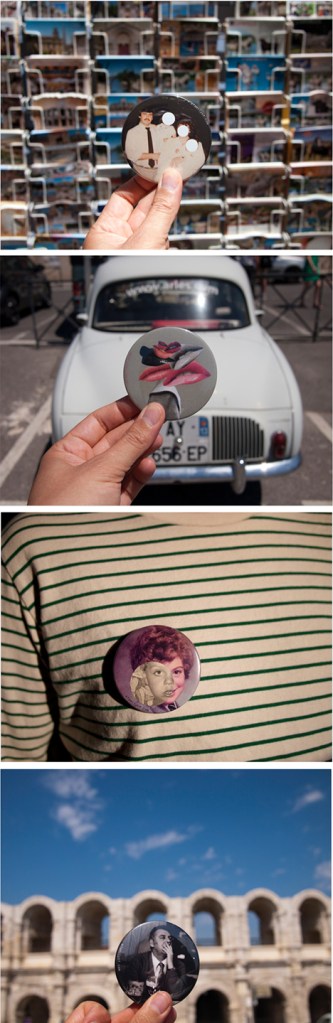
2013: A Family of go to Les Rencontres de la Photographie, Arles…with badges…
2011: Twice Removed exhibition and publication at Madlab & Cornerhouse, Manchester
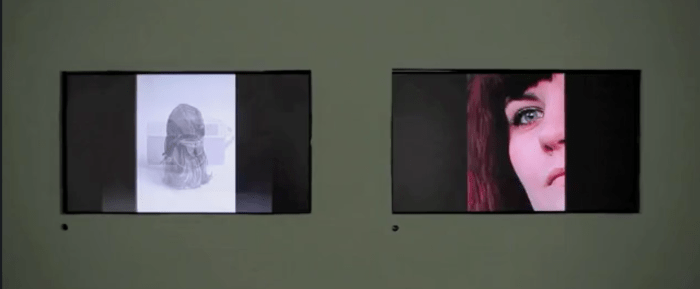
Short film about the exhibition made by Little Star HERE
The Fielden Project
The Fielden Project with Adrian Davies, Alex Jako, Anna Taylor, Eleanor Mulhearn, Erik Knudson, Laura Davies, Richard Mulhearn & Sarah Eyre
5th – 18th May 2014
Unitarian Church, Todmorden, West Yorkshire
My practice is concerned with a fascination for the uncanny and the surreal in everyday objects, as well as an on-going exploration of gender, identity and place, so, naturally I was drawn to the grotesques on the outside of the church. The grotesque is an interesting concept, the word originated from grotto (as in cave), and is applied to decorative architectural features often mistaken for gargoyles. Grotesque, in short, means things that have a multiple form, often an ‘unnatural’ combination of human, creature and plant.
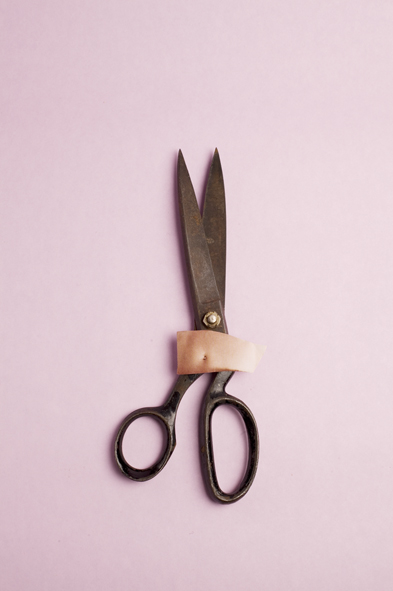
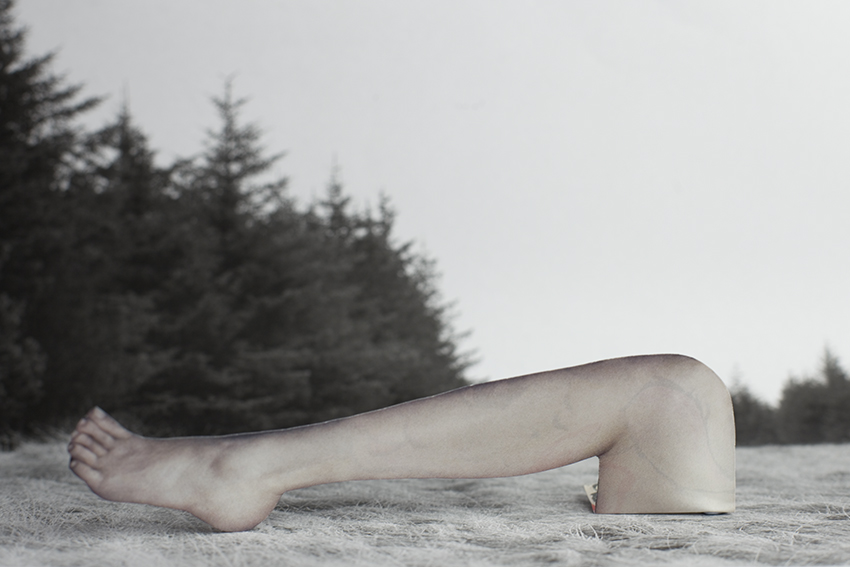
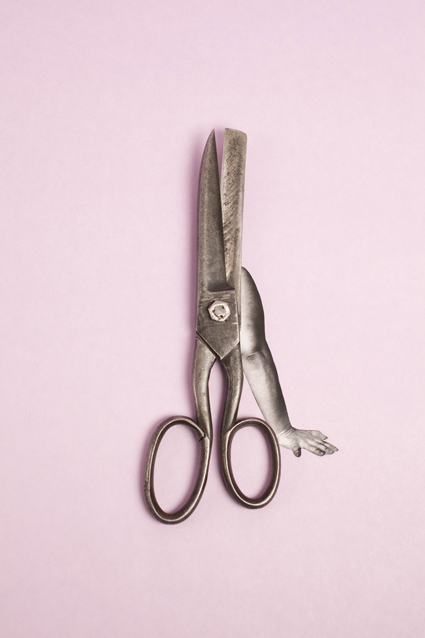
Mikhail Bakhtin describes the grotesque thus “A body in the act of becoming…never finished, never completed: it is continually built, created and builds and creates another body”. The grotesque can also be defined by forms that do not fit in to known categories, forms that multiply, or mutate. With this in mind I used the forms of the body – dismembered, re-assembled, and fused in combination with elements of Todmorden’s landscape and hand tools that are traditionally associated with gendered work within the town. The selection of ‘objects’ was informed by research into the textile trade – especially the mechanisation of the body during the industrial revolution. The choice of scissors makes a direct reference to gendered work but their form also suggests the human form.
Out of Thin Air

In June 1890, at a seance in the North of England, a golden lily was summoned into existence by a medium going by the name of Elizabeth d’Espérance. The flower remained manifestly real for a whole week, then ‘dissolved and disappeared.’ I’ve been holding on to this snippet of information for a long time, captivated by the image of a golden lily – and its unnatural manifestation.
This piece, developed as a response to Diorama: Blackpool’s Hidden Theatres – seemed the right place for me to develop connections between the popularity of mediums and clairvoyants, and the many forms of spectacle or entertainment they put on show in Blackpool towards the end of the 19th century. The seance in particular always fascinated me. It is an inherently theatrical experience: the darkened room, the heavy, velvet drapes, the anticipation of the audience, the conjuring of apparitions out of thin air, and the multitude of voices inhabiting the body of the medium, who performed, as if on stage, even though they were actually situated in just an alcove or a cabinet, set apart from the normal crowd.
The medium, nearly always female, plays her role in what could be regarded as a liminal state – becoming a threshold, to speak the words of the dead for an audience of the living, and to make physical forms out of purely spectral messages. This act of manifestation mirrors that of photography, just as much as it mirrored and was associated with telegraphy, in the imagination of the Victorians: the latent image materialising in the darkroom, the message being received through the aether by a receiver – both seemingly magic acts. The medium’s body can also be likened to a camera, just as it’s been compared to a telegraphic receiver – capturing the uncapturable, and making visible things the eye couldn’t normally see.
My moving image piece offers a contemporary response to this long relationship between technology, spectacle and the nineteenth century medium. The work was presented as an installation – an image flickering on a piece of glass – viewed through a peep hole.
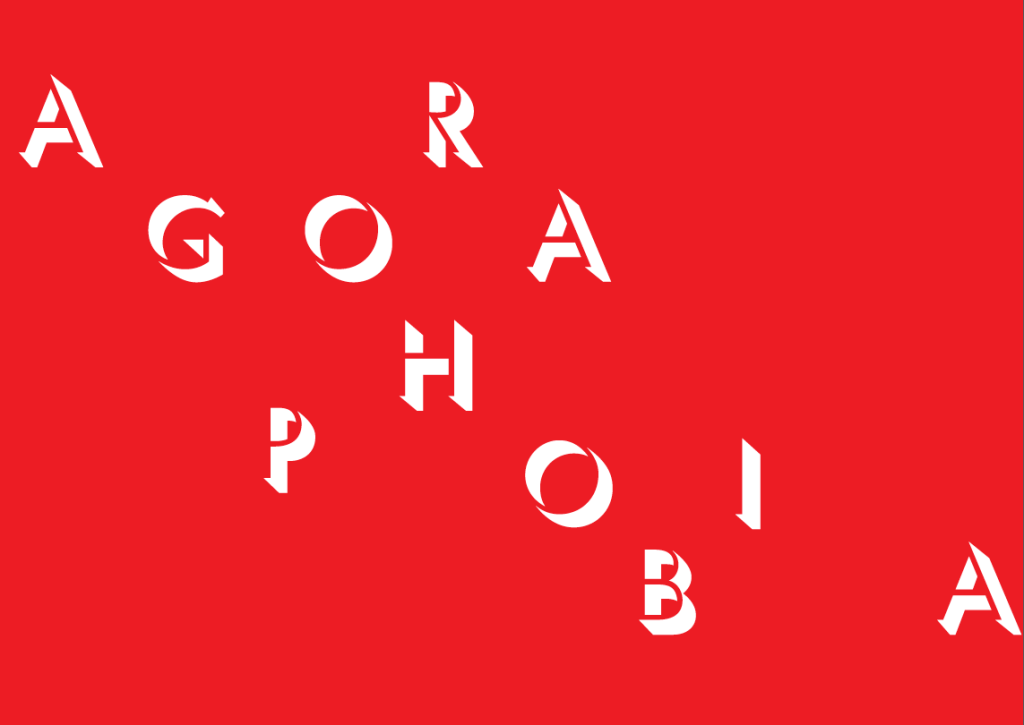
Agoraphobia: The Spaces Within
Exhibition Dates
Thursday 2nd May – Monday 3rd June
Agoraphobia: The Spaces Within is a three part project supported by Blackpool and the Fylde College’s Scholarship and Research Development Award.
The aim of the project was to create a visible community of practice amongst creative practitioners and students.
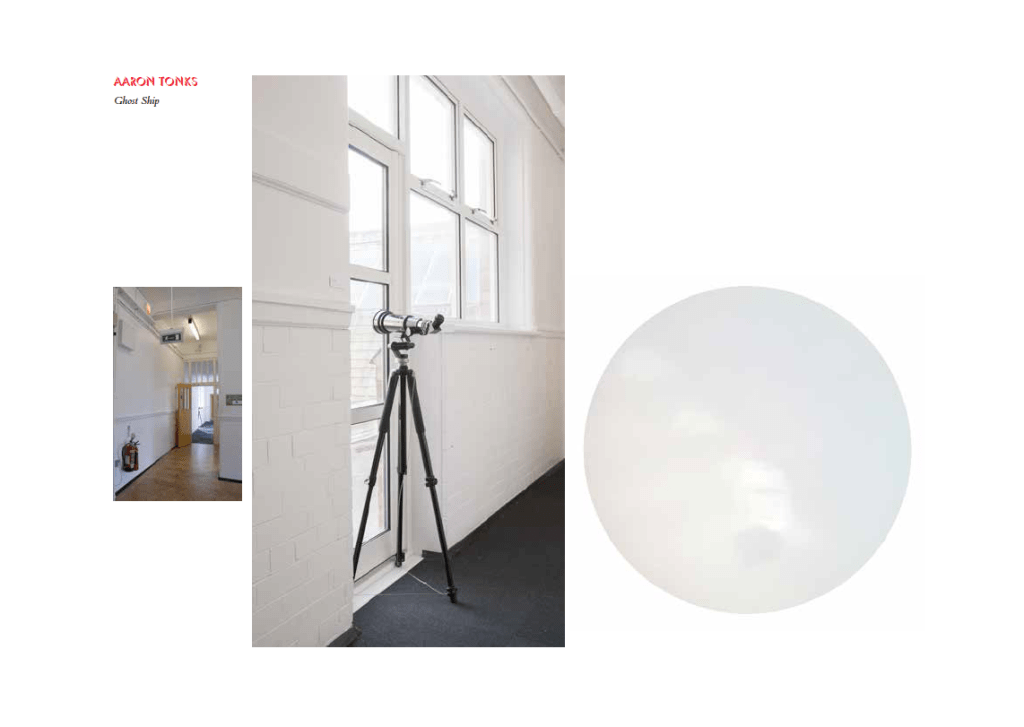
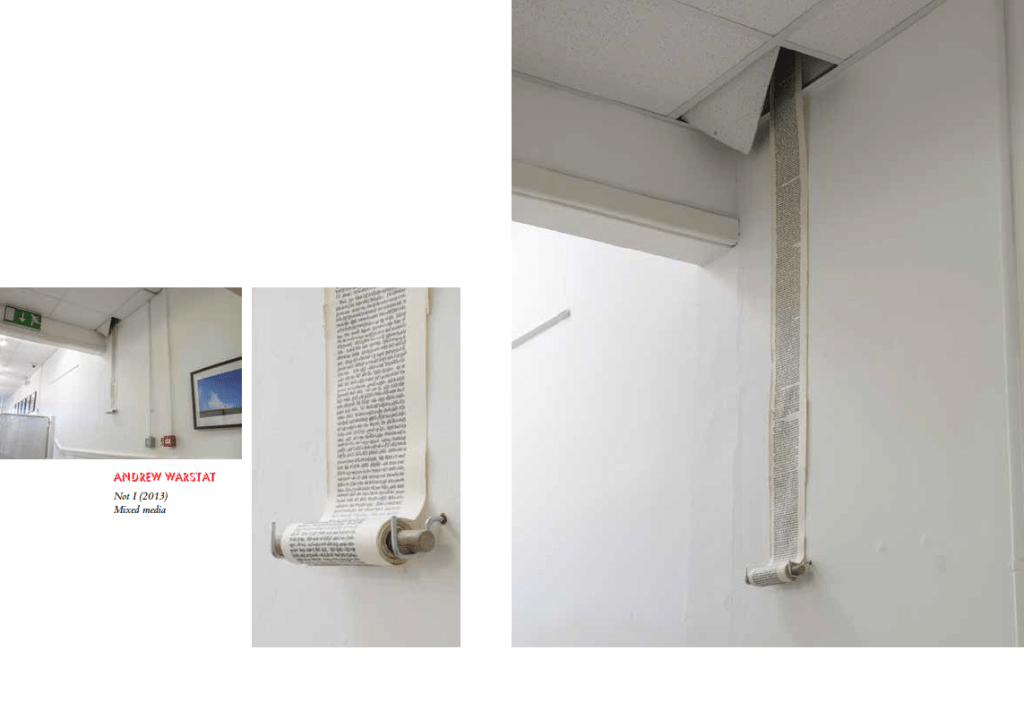
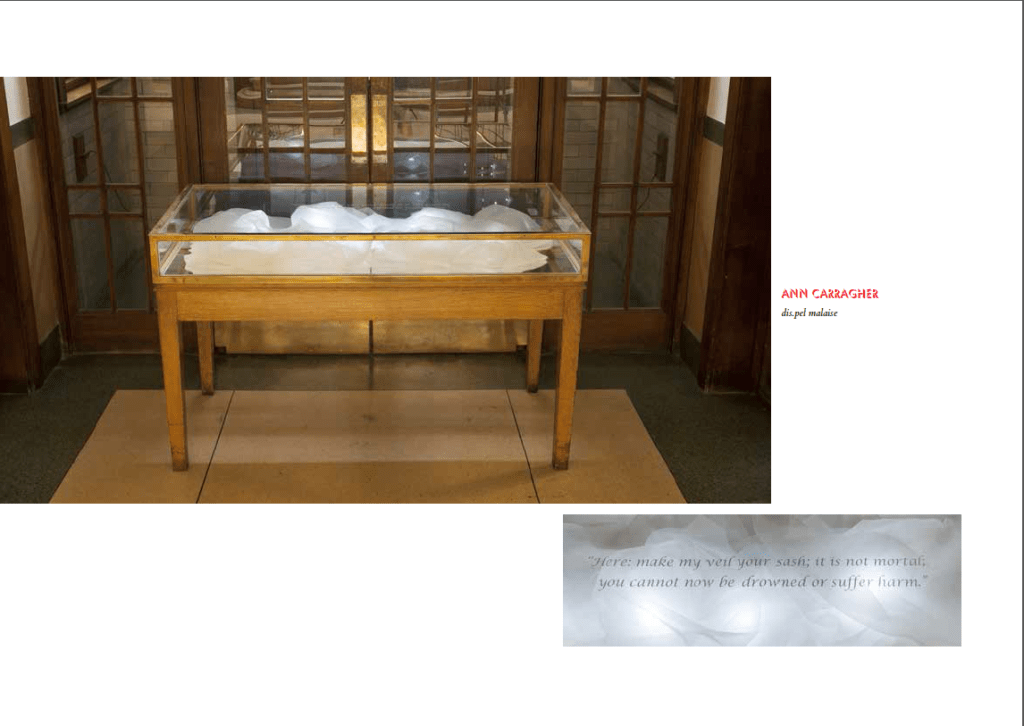
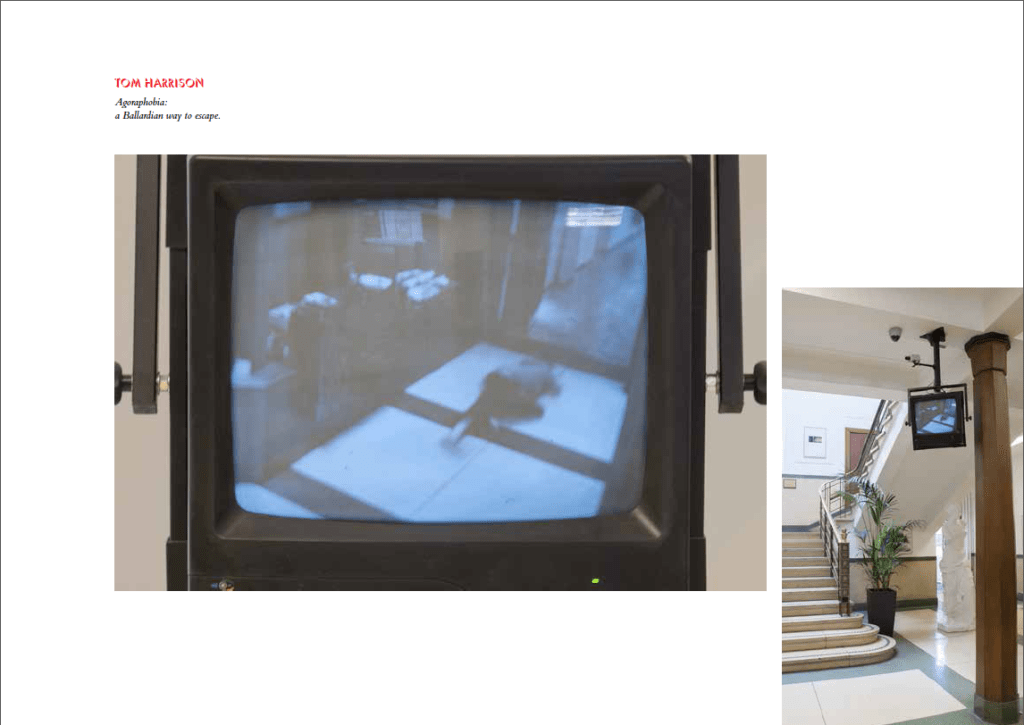
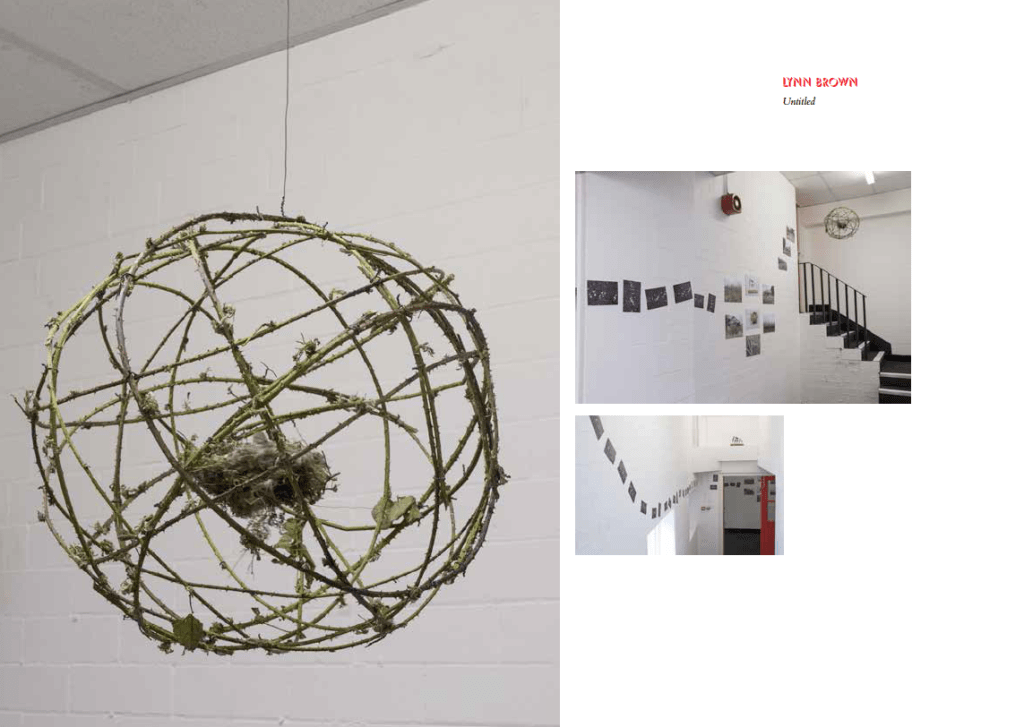
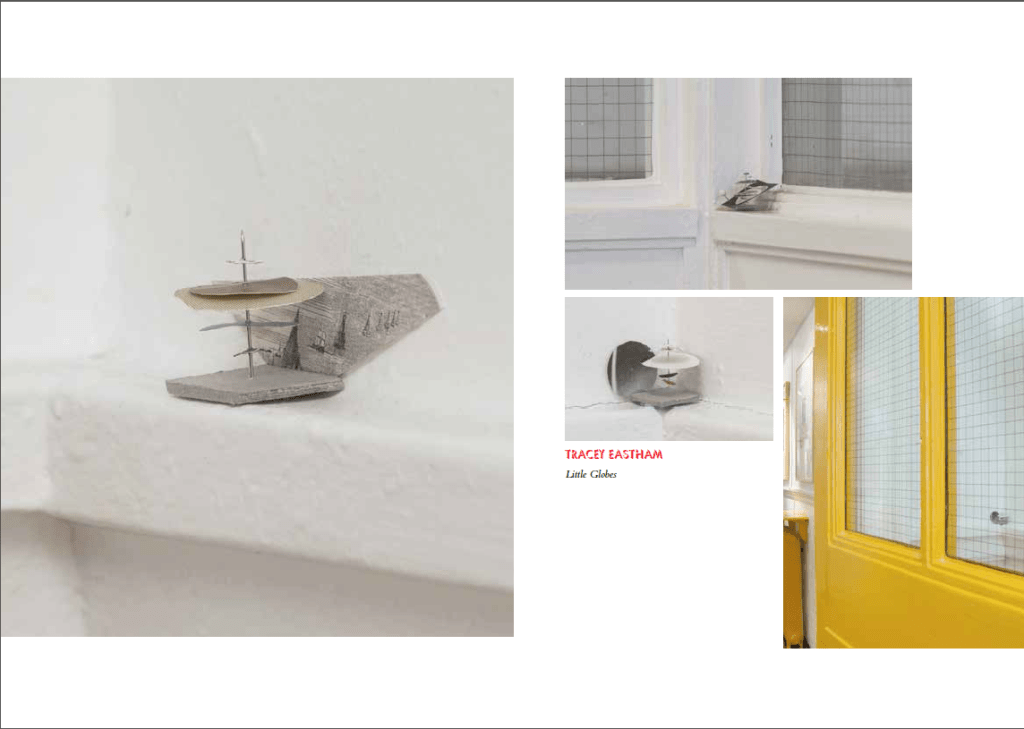
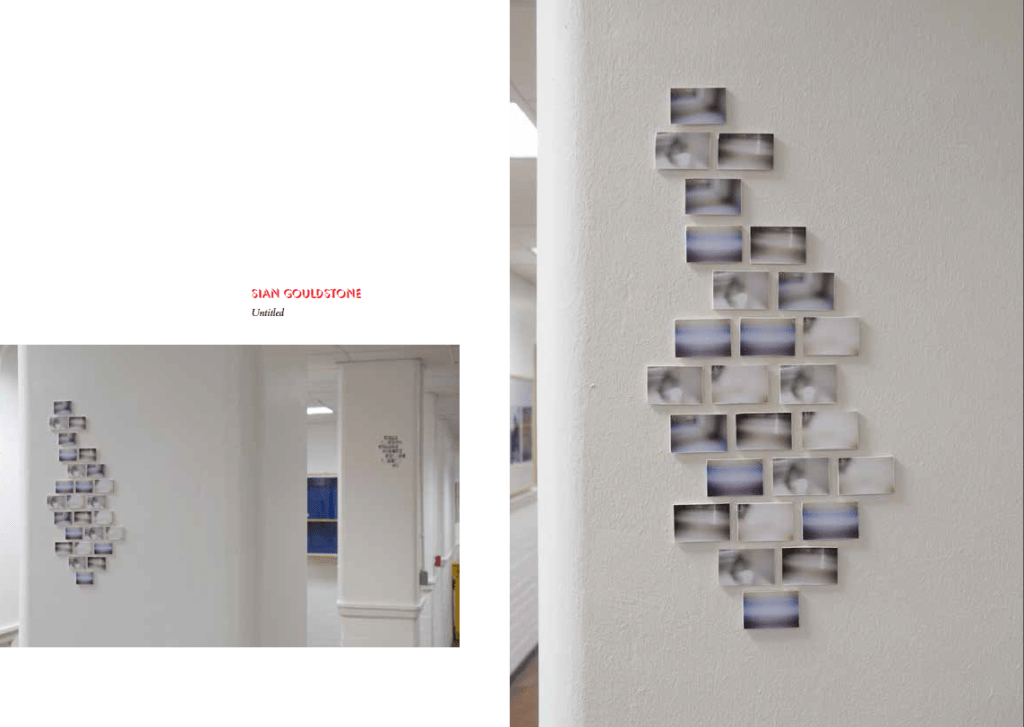
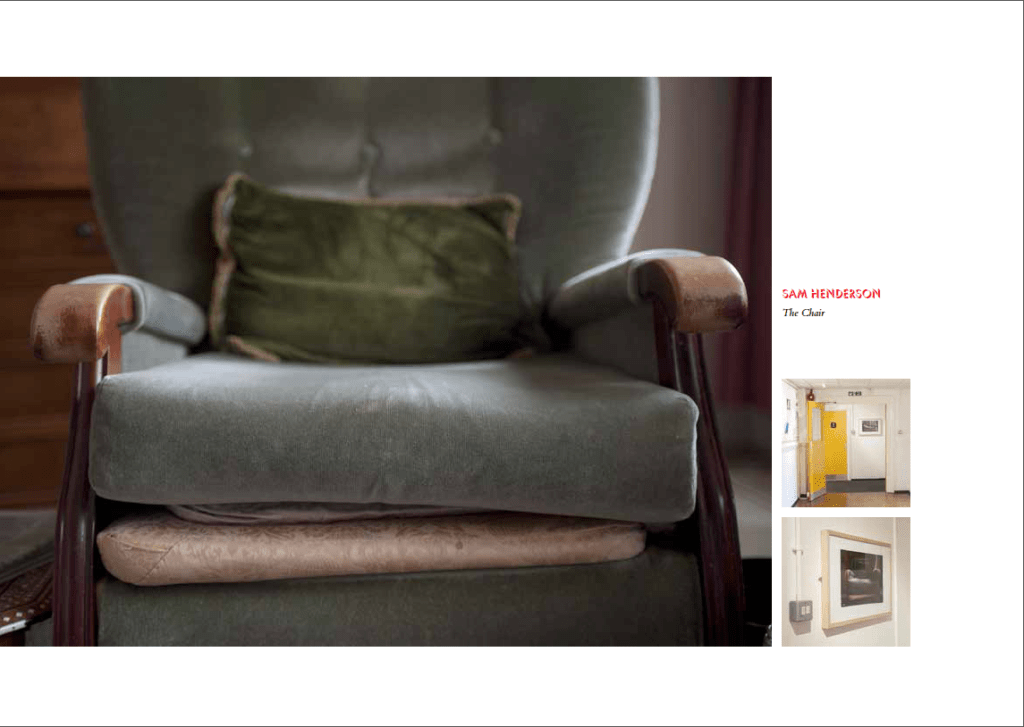
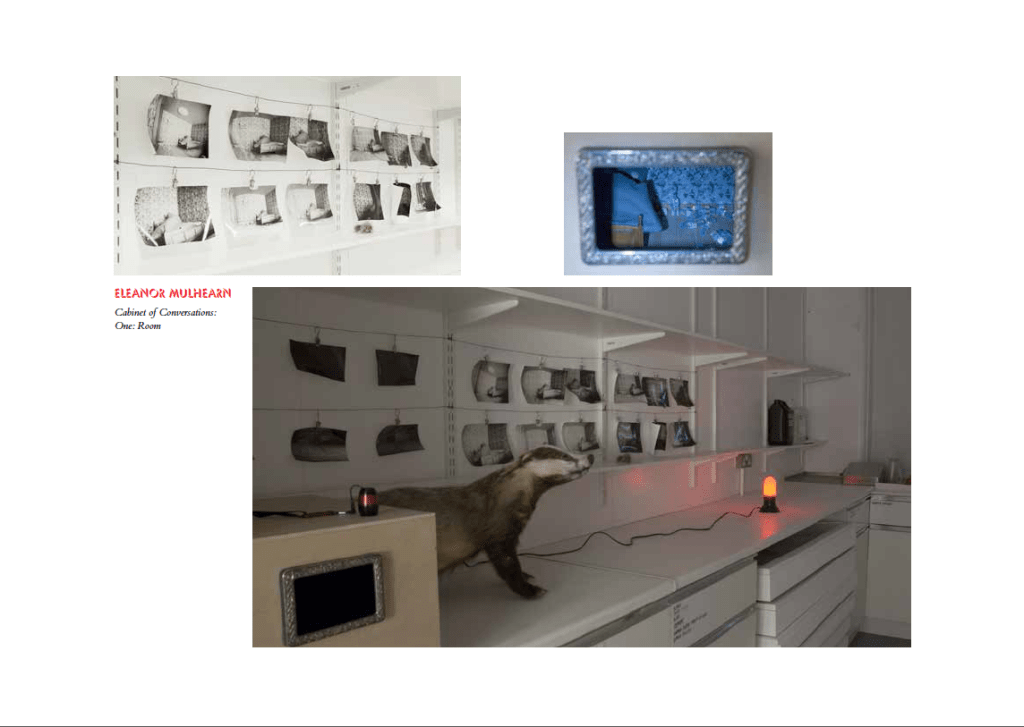
The theme of Agoraphobia was the starting point for a group of staff and alumnae from the School of Creative Arts to create a new piece of art work, specifically developed to create a dialogue with the College’s Palatine building. The resulting exhibition, installed in the Palatine Building, was a series of subtle artistic interventions that lead the viewer around the common and not so common areas of the building.
The second part of the project was the creation of a blog, where exhibitors made visible elements of their creative process as they worked towards their finished art work. The recording of and reflection on one’s creative process is common to lecturer / artists and students, and the sharing of this, often private activity, can enrich and support the teaching of art. Contributors to the project discussed how research informs their practice at a School of Creative Arts symposium on the 23rd May 2013.
A limited edition, hand-made exhibition catalogue (and downloadable PDF) was the final part of the project, designed by Rachel Tarlin as her contribution to the project. It drew together writing, sketchbooks and art works and copies are still available.
Project website https://agoraphobiaexhibition.wordpress.com/
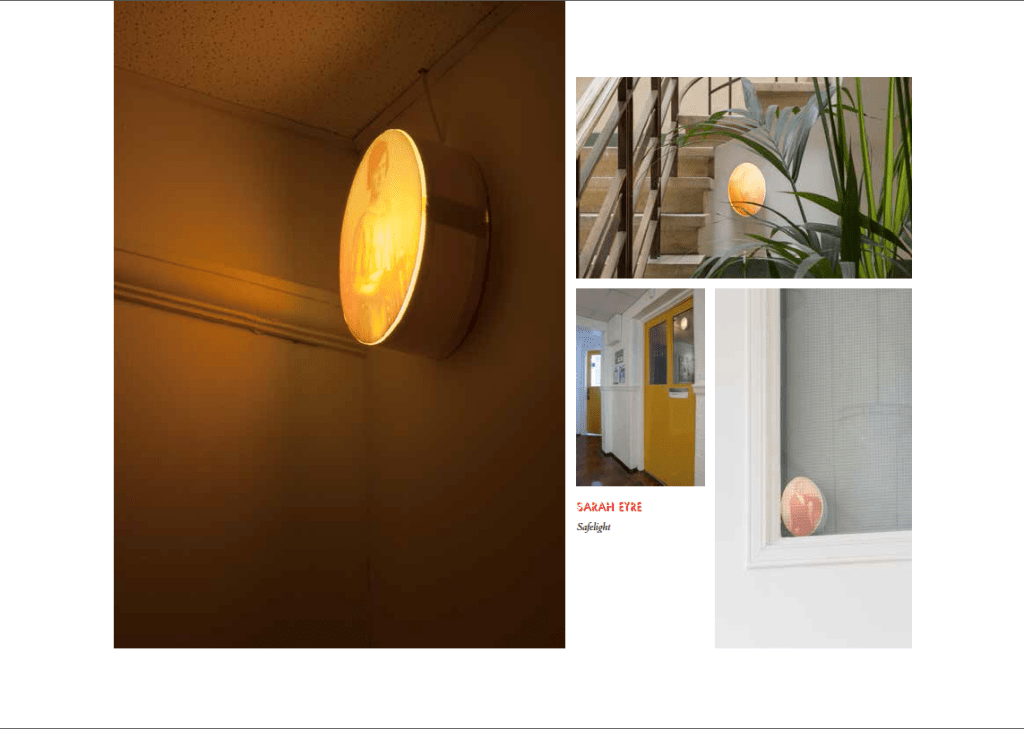
 Sarah Eyre